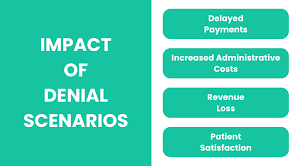
Every denied claim costs your healthcare organization more than the lost reimbursement. In 2024, initial claim denial rates rose to 11.8%, up from 10.2% the prior year, with providers spending over $19.7 billion annually overturning denials.
It creates a compounding administrative burden that drains staff time, delays cash flow, and obscures the operational weaknesses causing the denials. These persistent denials are not random; they are symptoms of predictable, addressable patterns in your revenue cycle.
By moving from reactive appeals to proactive, pattern-based analysis, you can transform how your organization manages revenue. This shift requires moving beyond individual claim reviews to examine systemic claim denial trends that reveal why payers are saying no. The goal is to correct issues before claims are submitted.
In this blog, we will provide a practical guide to identifying, analyzing, and acting on the most common and costly patterns in AR denials. We will outline a five-step framework to help you reduce denial rates, accelerate payer responses, and improve your overall financial health.
Identifying the Root Causes: The Top 5 AR Denial Patterns
The first step toward improvement is accurate diagnosis. Denial data, when categorized and tracked, reveals clear trends. Here are five of the most frequent and financially damaging patterns that plague provider organizations:
- Coding and Documentation Errors: This is often the largest category, encompassing incorrect procedure (CPT) or diagnosis (ICD-10) codes, insufficient documentation to support medical necessity, and mismatched codes. These errors are prime targets for payer audits.
- Eligibility and Registration Issues: Denials for “patient not covered” or “service not authorized” at the time of service are purely administrative but have a high volume. They stem from failures in verifying insurance eligibility, capturing accurate patient data, or obtaining required pre-authorizations.
- Payer-Specific Rule Changes: Payers frequently update their policies and coverage requirements. Claims are denied when billing practices do not adapt to these changes in real time, such as new local coverage determination (LCD) rules or modified requirements for specific modifiers.
- Duplicate Claims and Timely Filing: Technical denials occur when a claim is accidentally submitted more than once or when it is filed after the payer’s strict submission deadline. These represent lost revenue due to process breakdowns.
- Bundling and Medical Necessity Challenges: Payers may deny a service as “included” in a primary procedure (bundling) or deem it not medically necessary based on their internal criteria, often requiring a detailed clinical appeal.
Building Your Denial Intelligence Framework: From Data to Insights
To combat these patterns, you need a structured framework for analysis. Raw denial data is overwhelming; intelligence is actionable. Implementing this framework creates a clear path from problem to solution.
- Centralize and Categorize Data: Aggregate denial data from all sources—your EHR, practice management system, and payer remittance advice—into a single dashboard. Use consistent, detailed reason codes (e.g., “CO-22: Missing Modifier 25”) instead of vague categories like “coding error.”
- Quantify Impact: Assign a true cost to each denial pattern. Calculate not only the initial reimbursement value but also the labor cost for rework, the delay in cash flow, and the cost of appeals. This highlights which patterns are most damaging to your bottom line.
- Perform Trend Analysis: Move beyond monthly totals. Analyze denial rates by payer, provider, service line, and reason code over time. Look for spikes after payer policy updates or correlations with new staff or system changes.
- Identify Process Owners: For each major denial pattern, assign accountability to a specific department (e.g., registration errors belong to front-office management, coding errors belong to HIM).
- Establish Key Metrics: Track leading indicators like first-pass clean claim rate and denial rate by category, rather than just lagging indicators like total A/R days. This allows for proactive intervention.
Translating Analysis into Action: Targeted Prevention Strategies
With intelligence in hand, you can deploy targeted strategies to prevent denials before submission. Each major denial pattern has a corresponding preventative action.
- For Coding & Documentation
Implement proactive, AI-assisted coding tools that check for accuracy and compliance against the latest payer rules at the point of coding. Concurrent clinical documentation improvement (CDI) programs that engage providers at the point of care can drastically reduce insufficient documentation denials.
- For Eligibility & Registration
Mandate real-time eligibility checks for every patient encounter and automate flagging for services requiring prior authorization. Regular staff training on data entry accuracy is essential.
For Payer Rule Changes: Create a formal process for monitoring, disseminating, and implementing payer policy updates. This can be managed internally or augmented by technology that automatically updates rule engines.
- For Technical Errors
Implement a strong pre-submission “claim scrubber” that automatically checks for duplicates, validates codes, confirms patient data, and ensures timely filing deadlines are met. Standardize workflows to prevent manual resubmission errors.
Optimizing the Appeal Process for Faster Payer Response
Even with excellent prevention, some denials are inevitable. A streamlined, data-informed appeal process is critical for recapturing this revenue efficiently.
- Triage by Win-Probability: Use historical data to score denial appeals based on their likelihood of success and financial value. Prioritize high-value, high-probability appeals to maximize staff efficiency and cash recovery.
- Standardize Appeal Kits: For common denial reasons (like medical necessity for a specific procedure), create standardized appeal templates. These templates should include all necessary clinical documentation, payer policy references, and relevant guidelines to create a compelling case on the first submission.
- Track and Analyze Appeal Outcomes: Monitor not just appeal submission rates, but also appeal win rates and turnaround times by payer and denial reason. This analysis reveals which payers or denial types are most resistant, informing higher-level contract negotiations.
The Role of AI in Proactive Denial Pattern Analysis
Modern technology, specifically artificial intelligence (AI), is transforming denial management from a retrospective, manual task into a proactive, automated function. AI-powered revenue cycle platforms directly address the core challenges of pattern analysis.
These systems can autonomously analyze thousands of past and current claims to identify subtle, complex denial patterns that humans might miss. More importantly, they move to prevention. By integrating with coding and billing workflows, AI can act as a real-time compliance engine, flagging potential errors, such as an incorrect code pairing or a missing prior authorization, before the claim is ever submitted.
For example, an AI agent can continuously learn from payer behavior and edit claims against the latest rules, dramatically improving the first-pass clean claim rate. This shifts your team’s focus from chasing denials to managing only the complex exceptions, boosting overall productivity and reducing the cost to collect.
Monitoring and Continuous Improvement: Building a Sustainable Denial Management Program
Implementing the strategies for analyzing and preventing AR denials is not a one-time project but an ongoing cycle of improvement. To sustain results and adapt to changing payer landscapes, healthcare organizations must establish a formal, data-driven program for continuous monitoring.
- Establish a Formal Program: Transform denial management from reactive to proactive with ongoing, data-driven monitoring.
- Form a Cross-Functional Team: Create a committee with members from Revenue Cycle, HIM, Patient Access, Clinical, and IT to meet monthly and review KPIs and trends.
- Close the Feedback Loop: Systematically feed denial insights back to relevant departments (e.g., front-desk, providers) for immediate, targeted retraining and education.
- Conduct Regular Audits: Perform annual deep-dive audits to verify data integrity, assess appeal effectiveness, and uncover new optimization opportunities.
Conclusion
Persistent AR denials are a manageable problem, not an inevitable cost of doing business. The path to improvement is clear: stop reacting to individual denials and start analyzing the patterns that cause them.
By implementing a structured framework to identify root causes, taking targeted preventative action, and optimizing your appeal workflow, you can directly improve payer response times and accelerate cash flow.
The most forward-thinking organizations are augmenting these efforts with intelligent technology that automates pattern detection and prevention. This strategic approach turns your denial data from a source of frustration into one of your most powerful tools for financial stability and growth.
The result is a more efficient revenue cycle, a less burdened administrative team, and a healthier bottom line.