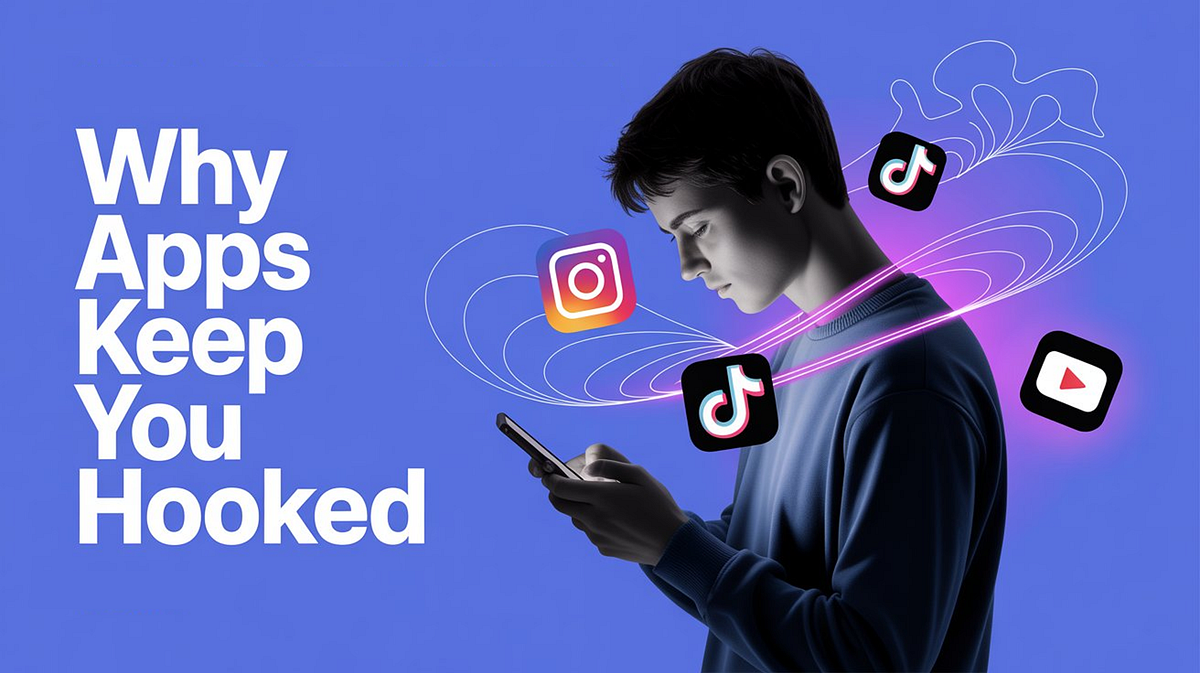
Most apps do not hold attention by accident. They hold it through structure.
A user opens the app for one reason. Then they stay for another. A message appears. A number changes. A new item loads. Each event is small. Together, they create momentum.
This momentum comes from two forces: reward and uncertainty.
Reward gives the user a reason to continue. Uncertainty gives them a reason to check again. If the app delivered the same value in the same way every time, attention would flatten. The experience would feel complete too quickly. But when timing varies, and outcomes arrive in uneven bursts, the brain stays alert.
That is the key.
Apps often feel addictive not because they are always useful, but because they are rarely finished. There is always one more update, one more result, one more possible reward. The system keeps the user close to the next moment.
This pattern appears across many product types. Social apps use likes, replies, and unread counts. Shopping apps use drops, stock alerts, and time-limited offers. Games use loot, streaks, and progress bars. Different product, same logic.
The design usually follows a simple loop:
- Trigger pulls the user in
- Action keeps the user moving
- Reward reinforces the behavior
- Uncertainty restarts the cycle
A strong app does not rely on one large reward. It relies on many small ones, delivered with enough variation to stay interesting.
This article examines how that system works. It begins with the first layer: why uncertainty is so effective at holding attention, even before the reward appears.
How Uncertainty Keeps Users Engaged Between Actions
Uncertainty creates tension.
The user does not know what comes next. That gap keeps attention active. The brain stays ready, waiting for the result.
If every action led to a fixed outcome, interest would drop fast. The system would feel solved. But when results vary, each action feels open. The next step matters.
This is why timing and variation are critical.
Variable Outcomes Hold Attention
Apps often avoid fixed rewards.
- A notification may or may not be important
- A feed may or may not show something valuable
- A refresh may or may not reveal new content
This variation creates a loop. The user checks again because the last result does not predict the next one.
The brain treats each interaction as a fresh chance.
Incomplete Information Drives Return Behavior
Uncertainty also works through partial visibility.
- A message preview hides full content
- A counter shows activity but not detail
- A feed loads gradually
The user sees enough to care, but not enough to finish. This creates a pull to continue.
The system never feels complete.
Fast Feedback Reinforces The Loop
Uncertainty works best when feedback is quick.
A delay breaks the loop. A fast response strengthens it.
The user taps. The result appears. The cycle resets.
This speed trains behavior. The user learns that checking leads to immediate resolution, even if the outcome varies.
Familiar Interaction Patterns Strengthen Trust
The system must feel stable, even if outcomes are not.
Buttons stay in place. Actions stay consistent. The interface feels predictable. This allows the user to focus on the outcome, not the mechanics.
For example, in environments where users return often—such as platforms offering quick access points like a slots game login—the entry process is simple and repeatable. The structure stays constant, while the results behind it vary. This balance keeps users comfortable with the action while remaining curious about the outcome.
Uncertainty does not replace reward. It prepares the user for it.
It keeps attention active between actions. It makes each interaction feel meaningful, even when the value is small.
Without uncertainty, engagement fades. With it, the system stays alive.
How Reward Systems Reinforce Behavior And Build Habit
Uncertainty keeps the user waiting. Reward makes them return.
A reward does not need to be large. It needs to be clear and immediate.
The brain responds to small signals:
- A like appears
- A message arrives
- A progress bar moves
- A number increases
Each signal confirms that the action mattered.
Small Rewards Work Better Than Rare Big Ones
Large rewards feel good, but they are slow.
Small rewards arrive often. They build rhythm. The user learns that effort leads to outcome. This link becomes automatic.
A steady stream of small wins keeps the system active.
Visible Progress Strengthens Commitment
Progress turns random actions into a path.
- Levels increase
- Streaks grow
- Completion moves forward
The user sees movement. That movement creates attachment. Leaving the app feels like losing progress.
This is not about complexity. It is about visibility.
Reward Timing Shapes Behavior
The moment of reward matters.
- Immediate rewards create fast loops
- Delayed rewards build anticipation
Strong systems mix both. Quick feedback keeps engagement high. Delayed outcomes extend the cycle.
The user stays because something is always about to happen.
Consistency Builds Trust
Rewards must feel fair.
If outcomes seem random without pattern, trust breaks. The user stops believing that actions matter.
Good systems balance variation with structure. The user cannot predict each result, but they understand the system.
Reward closes the loop started by uncertainty.
The user acts. The system responds. The result reinforces the behavior.
Repeat this cycle enough times, and the action becomes habit.
How Engagement Loops Scale Across The Entire Product
Single interactions create interest. Connected loops create retention.
High-performing apps do not rely on one cycle. They stack multiple loops that feed into each other. When one loop slows, another takes over.
Primary Loop: Core Action And Immediate Reward
This is the main behavior.
- Scroll → see content
- Tap → get response
- Play → receive outcome
It is fast. It repeats often. It builds the base habit.
If this loop fails, the product fails.
Secondary Loop: Return Triggers
These loops pull the user back.
- Notifications
- Reminders
- Time-based updates
They do not require deep engagement. They only need to restart the primary loop.
A single trigger is enough to bring the user back into the system.
Progress Loop: Long-Term Retention
This loop extends usage over time.
- Levels
- Achievements
- Streaks
It gives the user a reason to stay beyond the current session. It creates continuity between sessions.
Without this loop, usage becomes short and shallow.
Social Loop: External Reinforcement
This loop adds pressure and validation.
- Likes
- Comments
- Shares
Other users become part of the system. Their actions create new triggers and rewards.
This loop scales fast because it grows with the user base.
These loops do not work alone. They connect.
A notification (secondary loop) brings the user back. The user scrolls (primary loop). They gain progress (progress loop). They receive feedback from others (social loop).
This chain keeps the system active without forcing attention.
Strong products design these loops from the start. They do not add them later. Each loop supports the others.
When done well, the user does not think about the system. They simply follow it.
Designing Engagement With Structure, Not Chance
Apps feel addictive when they remove randomness from design.
Not from outcomes. From structure.
The system is clear:
- Uncertainty keeps attention active
- Reward reinforces action
- Loops connect behavior over time
When these elements align, engagement becomes stable.
Most products fail because they rely on isolated features. A notification here. A reward there. Without connection, these features lose power. They create short spikes, not lasting behavior.
The better approach is intentional.
Design each part of the experience to answer one question:
- Why should the user act now?
- Why should they continue?
- Why should they return later?
Each answer must appear inside the product, not outside it.
This removes guesswork.
You do not hope users stay. You guide them step by step. You reduce friction. You control timing. You make outcomes visible.
That is the shift.
From adding features to building systems of behavior.
Once that system works, engagement stops depending on luck. It becomes something you can test, improve, and scale with precision.